Spaces define the environments in which work occurs. They do not perform the work; they permit it. — A Mason's Work
The Question Behind Every Meeting
Think about the last time you were in a room where something real happened.
Not a productive meeting. Not an efficient workshop. Something that had a different quality to it; where people arrived as themselves, stayed present, and left changed in some small but undeniable way. Where the work consumed everyone in it and the clock disappeared.
Now think about who built that room.
Not the physical space, though that mattered too. Who built the conditions inside it? Who made the decisions, deliberate or intuitive, that allowed the group to drop the outside world and enter something different? Who held the standard?
In every case, someone did. That experience was not an accident. Someone understood, consciously or not, that the quality of the work emerges from the quality of the space. Someone was functioning as the Worshipful Master, whether or not they held the title.
In A Mason's Work, the Worshipful Master is defined as the organizing center of leadership: charged with directing work, maintaining standards, and creating the space that allows a system to function coherently. Without this function, effort fragments and intention loses its direction, regardless of the worker's skill. The Worshipful Master is not simply the presiding officer. He is the architect of the conditions under which elevated work becomes possible. And that architecture begins not with the room, but with the self.
Leadership of Self First
The sequence matters. The Worshipful Master's intrinsic function is the faculty of self-leadership that regulates internal impulses and directs attention in alignment with chosen values. Before he can hold the standard for the group, he must hold it for himself. Before he can create a space where others drop the noise of the outside world, he must have already done that work.
This is the part most leaders skip.
We think of space-creation as an outward act: arranging the room, setting the agenda, opening the meeting. But the most important threshold to cross is the interior one. What you carry into the room is contagious. The Worshipful Master's internal state shapes the climate he creates for others; the diagnostic question that governs this role is direct: How is my current internal state shaping the climate I am creating for others?
This is where the Preparing Room becomes personal practice rather than ritual formality. In Masonic tradition, the preparing room is a literal space; a place of divestiture before entry, where the candidate strips away the trappings of the outside world to be oriented toward the work ahead. It is the space of intentional formation, where the function is not to begin the work but to prepare the worker: quieting noise, adopting a posture of receptivity and humility.
For the leader, the preparing room is not a room. It is a practice that must be repeated every time the threshold is approached. It might be cleaning the desk before a session begins. It might be a few minutes of silence before walking into a room. It might be a deliberate decision about what you are bringing in with you and what you are leaving at the door. The content of the ritual is less important than its function: establishing a boundary between ordinary time and the time set aside for consequential work.
There is a failure mode worth naming here. Call it the Perpetual Seeker: the person who becomes addicted to the cleansing process, spending all available time in preparation and never building the muscle of the actual work. The preparing room is a threshold, not a destination. You cross it and move forward. If you find yourself spending more energy preparing than working, the ritual has become avoidance decorated as discipline.
The aim is to arrive at the work present, regulated, and ready. What that costs varies by person. Only the individual can determine what it takes to cross their own threshold. The Worshipful Master who does not know his own threshold cannot build one for anyone else.
The Floor, Not the Ceiling
Once the interior threshold is crossed, attention turns to the environment that will hold the work.
Most of what gets written about optimal environments focuses on the ceiling: the perfect desk, the ideal lighting, the right noise level, the complete ergonomic solution. The ceiling is worth pursuing eventually, but it is worse than useless if the floor has never been established. You cannot start work from the ceiling. You start from the floor.
The minimum viable environment has three requirements: a clear surface or space, managed interruption, and basic physical comfort. That is the complete list. The environment needs to remove enough friction that the work can begin; it does not need to do anything more than that.
The Heath brothers make a related observation about where leaders tend to invest their attention: organizations, they note, dramatically under-invest in building peaks while spending most of their energy filling potholes (Heath & Heath, 2017). The minimum viable environment argument is the same insight applied to physical space. We over-engineer toward removing every possible negative while neglecting to ask whether the conditions for something genuinely elevated have been established at all. A room with no friction but no invitation produces work that is merely unobstructed. The Worshipful Master is not primarily in the business of pothole removal; he is in the business of peak creation.
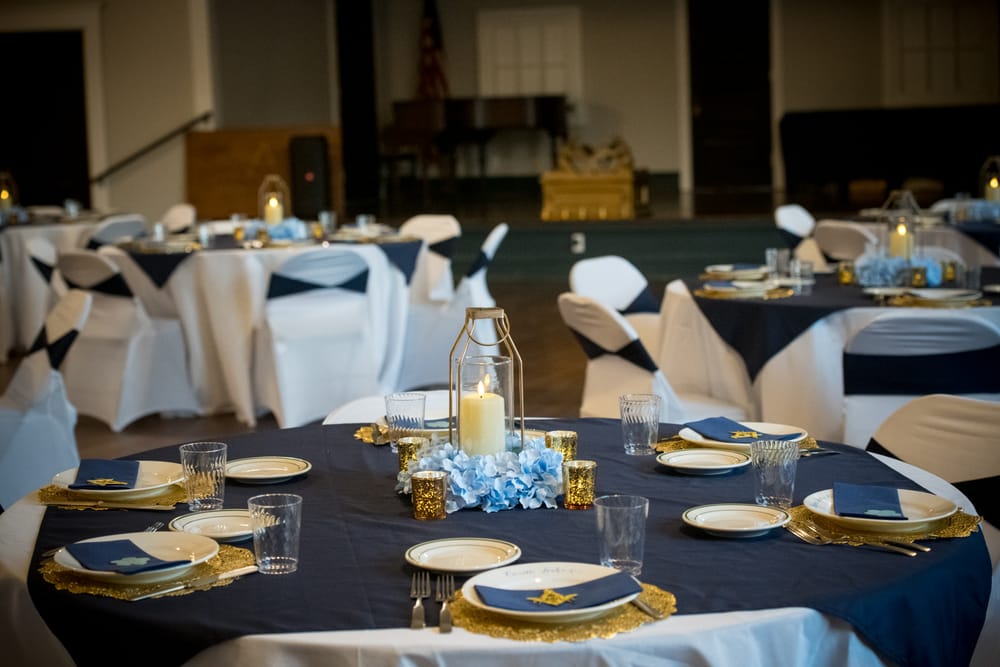
This has a useful corollary: imperfect environments can produce extraordinary work, because the environment's job was never to create the work. It was to get out of the way. Think back to the clubhouse you built as a kid, the fort in the backyard, the corner of the school library where a group of students disappeared into a project for an afternoon and only came up for air when someone had to go home. Nobody engineered those conditions. There was no optimal setup. There was a clear enough surface, few enough interruptions, and enough shared investment in the work that the environment simply receded into the background, which is precisely what a good environment does.
The minimum viable environment establishes the floor. Once that floor exists, the craftsman's responsibility is to stop thinking about it. The workshop is not the goal; it is what the goal requires. The Worshipful Master who spends the entire session managing the room has confused the container with the work.
This principle is especially important when leading others. The tendency in planning group sessions is to over-engineer the environment in the hope that the conditions themselves will produce the desired experience. They will not. The environment cannot manufacture care; it can only create a space where care has room to emerge. The distinction matters. One is a setup for disappointment. The other is the correct understanding of what space-creation can and cannot accomplish.
Engineering the Threshold for Groups
The hardest version of this work is the group version.
When the work involves only yourself, you control every variable: the desk, the ritual, the moment the work begins. When you add other people, those variables multiply and most of them are outside your authority. People arrive carrying whatever morning they had, whatever conflict they most recently left, whatever urgency is still buzzing in their pocket. Asking them to be present is a big ask. The meeting that fails before it begins almost always fails here, not because the work was wrong or the people were wrong, but because nobody built the startup ritual that allows everyone to cross the threshold together.
The Lodge, as both a physical space and a symbolic one, exists precisely to solve this problem. It is a bounded environment governed by rules, roles, and ritual order, whose primary function is to separate ordinary life from purposeful work, creating the conditions where attention, conduct, and meaning are held to a higher standard than the world outside. The Lodge is not where work is done differently; it is where the conditions that permit different work are maintained.
The Worshipful Master's extrinsic responsibility is the management of authority and presence to set a stable climate where others can engage, listen, and contribute. The word climate is deliberate. Climate is not instruction. It is not agenda. It is the ambient condition of a space, something experienced before any explicit content is delivered. A group knows within minutes of arriving whether the room has been held or abandoned, whether someone cared enough to create conditions worth entering, whether the experience they are about to have was designed or merely scheduled.
Good group threshold design follows a sequence. Physical comfort comes first; the body's needs must be met before the mind can be asked to do anything. Water, temperature, basic needs satisfied, a place to put things down: these are not amenities; they are prerequisites. Next comes the divestiture point, which is the most commonly skipped element and the most consequential. This is where people are given permission and mechanism to leave the outside world outside. It might be a moment of silence. It might be a brief intention-setting. It might be something as simple as a welcome that names what is about to happen and why it matters. What it accomplishes is a signal: that was out there, and this is in here, and they are different. The Tyler in Masonic tradition serves as the attention gate, the faculty that decides which stimuli are allowed to enter awareness in the first place. In a group context, the Worshipful Master functions as the Tyler for the collective. He decides, through the conditions he sets, what the room will permit and what it will not.
The opening ritual in lodge, when executed with intention rather than endured as rote, performs this function. It is not ceremony for its own sake. It is a structured divestiture, a shared crossing of the threshold. The rituals are not performances; they are invitations. When people receive that invitation genuinely rather than going through the motions, the room changes. Anyone who has been in a lodge room where the opening was executed with real presence, versus one where it was recited to get to the business portion, has felt this difference in the room before a word of actual work was spoken.
There is research that sharpens why this matters so much. Chip and Dan Heath, in The Power of Moments, document what psychologists call the peak-end rule: when people assess an experience afterward, they do not average their moment-by-moment sensations. They remember the peaks and the transitions. Everything in between tends to fade. College alumni, when surveyed about their most vivid memories, placed fully forty percent of them in the first six weeks of their freshman year; the middle of the experience, however full it was, collapsed into relative blur (Heath & Heath, 2017). The practical implication for any leader designing a group experience is direct: the beginning of the session will be remembered. How people cross the threshold, what it felt like to enter, whether the room signaled that something different was happening, these are the moments that anchor everything that follows. The Heath brothers put it plainly: transitions should be marked. Not acknowledged in passing, not assumed to handle themselves, but deliberately designed and held.
The group that skips this step is trying to build on an unlaid foundation. The stones sit there. The mortar is available. Nothing binds because the surface was never prepared.
Play as the Mindset That Unlocks Flow
All of this preparation, personal and environmental and collective, is in service of a particular kind of work. Not efficient work. Not measurable work. Work that has the quality of play.
This requires a word of clarification, because play in this context does not mean easy or frivolous. It means something precise: approaching the work with curiosity rather than attachment to outcome. Loosening the grip on what the result needs to be, so that the process itself can move and breathe and teach. Work as a discovery process where you are not measuring yourself against yesterday, not comparing your output to your neighbor, but present to the experience itself.
The research on intrinsic motivation is relevant here. When people engage with work for its own sake rather than for external reward or the avoidance of failure, they demonstrate higher creativity, greater persistence, and qualitatively better output (Deci & Ryan, 1985). The outcome-focused mindset that most professional environments enforce is not neutral; it actively suppresses the kind of engagement that produces the best work. A man who enters the ritual for the hundredth time with the same rote memorization he brought the first time has never actually learned the work. The memorization is the outcome focus. The transmission is the play.
The Worshipful Master who models this orientation gives the group permission to adopt it. This is the interpersonal dimension of his intrinsic work: his relationship to the work sets the ceiling for the room's relationship to the work. If he is managing the experience, the room will manage it. If he is in it, the room can enter it.
Being on the Level: Surrender as the Destination
Everything built so far, the personal threshold, the minimum viable environment, the group entry, the play mindset, has been infrastructure for a single moment. The moment the managing stops and the being begins.
In Masonic practice, this state has a name: being on the level. Not as a metaphor for fairness or equality, but as a description of operational state. Everyone in the room is operating at the same level of engagement with the work. There is nothing above it and nothing below it. There is only the work, on the level.
This is the flow state that Csikszentmihalyi documented across domains and decades: the dissolution of self-consciousness, the collapse of the gap between the worker and the work, the distortion of time that makes an afternoon feel like minutes (Csikszentmihalyi, 1990). Masonic ritual points toward this experience in the tradition of sublime silence, work so absorbed that the noise of the outside world ceases to penetrate. The temple in Jerusalem, the ritual reminds us, was built without the sound of metal tools. In sublime silence, the ancient brethren reared the sacred edifice. The silence is not the absence of sound. It is the presence of total attention.
This state cannot be forced. It can only be permitted. Which is the whole argument of this arc: everything the Worshipful Master does in creating the space, every element of preparation and environment and group threshold, is an act of permission. He is building the conditions under which this experience becomes possible. He cannot manufacture the surrender. He can only remove the obstacles to it.
The surrender itself, when it arrives, carries a particular quality: equanimity that requires a temporal perspective, releasing both the urgency to accelerate and the anxiety about what comes next. The work is enough. The present moment is the only place the work actually exists.
The Worshipful Master who has done the interior work, who has crossed his own threshold, who has prepared the room and held the standard and modeled the play mindset, creates the conditions for this. He does not experience it for the group. He experiences it with them. The elevated state, when it emerges in a group, is not the product of one person's effort; it is a collective phenomenon that arises when the conditions are right and everyone has consented to be present. The leader who builds this space is not absent from it. He is, perhaps, more present than anyone else in it, because he understood before anyone arrived what the work required.
The Work, Step by Step
Step one: Cross your own threshold first. Before any session of consequence, establish your personal preparing room practice. Name what you are bringing in and what you are leaving at the door. The practice can be brief; its function is to establish a boundary between ordinary time and the time about to begin. If you find yourself spending more time here than on the work itself, simplify the ritual.
Step two: Establish the floor, not the ceiling. For the environment: clear surface, managed interruption, physical needs met. That is sufficient. Build the minimum viable conditions and then stop thinking about them. The room's job is to get out of the way.
Step three: For groups, engineer the entry. Give people a place to put things down, physically and metaphorically. The divestiture point, whether a moment of silence, an intention, an opening ritual executed with genuine presence, is not optional. It is the foundation. A group that skips this step will spend the first thirty minutes of the session doing it unconsciously anyway, usually at the expense of the work.
Step four: Ask what this space permits. Before any significant session, name where the work belongs. Is this Lodge work, requiring bounded coherence and shared standard? Is it Preparing Room work, where readiness must be cultivated before entry? Is it work that belongs out in the world, where the testing ground is uncontrolled circumstance? The Worshipful Master who names the space governs it. The one who does not is governed by it.
Step five: Model the play mindset. Bring curiosity to the work visibly. Loosen your grip on the predetermined outcome enough to let the work move. The room will follow the lead of the person who set the standard.
Step six: Release the management and enter the work. The infrastructure is built. The threshold is crossed. The group is present. Stop engineering the experience and become part of it. The Worshipful Master who cannot step out of the managerial role and into the work has confused the means with the end. The space was built for this moment. Enter it.
Closing
The Worshipful Master does not produce the work. He produces the conditions under which the work can become something more than a task completed.
This is leadership at its most fundamental and most demanding: creating the space where others can do what they could not do without it, while holding the standard that keeps that space worth entering. The external architecture, the room, the threshold, the ritual, the environment, is inseparable from the internal one. The man who has never prepared himself cannot prepare the room. The man who has never crossed his own threshold cannot hold one for anyone else.
The result, when it works, is something the participants will remember long after the agenda is forgotten. Not what was accomplished, but what it felt like to be fully present and working on the level together. Not because the content was especially brilliant, but because the space was held well enough that something true could emerge.
That is the art of the start. And it is always, first, an inside job.
📚 References
Amabile, Teresa M. Creativity in Context. Westview Press, 1996. The definitive research establishing how the social and physical environment shapes intrinsic motivation and creative output in individuals and groups; directly supports the argument that the quality of the container determines the quality of what it permits.
Csikszentmihalyi, Mihaly. Flow: The Psychology of Optimal Experience. Harper & Row, 1990. The foundational research on the flow state, including its relationship to presence, ego dissolution, and the conditions that permit its emergence; directly supports the "being on the level" framework developed in the final section.
Deci, Edward L., and Richard M. Ryan. Intrinsic Motivation and Self-Determination in Human Behavior. Plenum, 1985. The source research for self-determination theory and intrinsic motivation, establishing why the play mindset produces qualitatively superior engagement and output compared to outcome-focused approaches.
Heath, Chip, and Dan Heath. The Power of Moments: Why Certain Experiences Have Extraordinary Impact. Simon & Schuster, 2017. Documents the peak-end rule and its implications for experience design; provides the empirical foundation for the argument that transitions must be deliberately marked and that leaders under-invest in peaks while over-investing in removing friction.
Mattocks, Brian. A Mason's Work: Reclaiming Operative Fraternalism Through Symbolic Self-Development. A Mason's Work Press, 2026.
Newport, Cal. Deep Work: Rules for Focused Success in a Distracted World. Grand Central Publishing, 2016. Provides the contemporary productivity framework for managed interruption and environmental design as preconditions for high-quality cognitive work; supports the minimum viable environment argument.

