
The Operative Framework
The Symbols
Sixty symbols from the Masonic tradition — each defined by its operative meaning and place in the Operative Protocol. These are the tools the Craft was always meant to use.
Spaces
4 symbols
The Examining Room
The space of testing — where claims, candidates, and ideas are assessed before being admitted.
→
The Lodge
The space of integration — where the individual brings himself to bear on shared work.
→
The Preparing Room
The space of readiness — where the self is stripped of what is unnecessary before entering the work.
→
The World
The space of trial — where principles are tested against actual conditions.
→Roles
14 symbols
Chaplain
The role of centering — maintaining alignment with meaning amid activity.
→
Guide
The role of mentored passage — walking alongside without substituting for the other's own judgment.
→
Junior Deacon
The role of communication gating — managing the flow of messages and preserving neutral ground.
→
Junior Master of Ceremonies
The role of alignment — verifying readiness and contextual appropriateness before proceeding.
→
Junior Warden
The role of regulation — maintaining sustainable rhythm and preventing burnout.
→
Pursuivant
The role of influence authentication — verifying authority and protecting the work from unvetted sources.
→
Secretary
The role of honest recollection — maintaining accurate records, preventing the distortion of history.
→
Senior Deacon
The role of translation — bridging the gap between intention and execution without losing meaning.
→
Senior Master of Ceremonies
The role of epistemic verification — testing claims before acting on them.
→
Senior Warden
The role of conclusion — ensuring work is completed and contribution is recognized equitably.
→
The Freemason
The role of the conscious participant — recognizing agency and choosing engagement over reaction.
→
The Worshipful Master
The role of intentional governance — holding vision, setting standards, and maintaining coherence.
→
Treasurer
The role of stewardship — ensuring resources are deployed in alignment with values, not just efficiency.
→
Tyler
The role of attention gating — protecting focused work from distraction and intrusion.
→Tools
19 symbols
24-Inch Gauge
The instrument of intentional apportionment — dividing time and effort into proportions that reflect actual priorities.
→
Cabletow
The instrument of calibrated commitment — the cord that holds without enslaving, binding with preserved agency.
→
Compasses
The instrument of containment through proportion — marking the boundary that defines the scope of the work.
→
Entered Apprentice
The perspective of the disciplined beginner — receiving instruction with genuine humility and curiosity.
→
Fellowcraft
The perspective of deliberate development — moving beyond enthusiasm to the disciplined effort that produces genuine mastery.
→
Gavel
The instrument of decisive subtraction — ending deliberation and removing what is unnecessary.
→
Hoodwink
The instrument of intentional suspension — the voluntary darkness that enables deeper understanding.
→
Left Slipper
The instrument of intentional pledge — the willingness to commit before knowing where the path leads.
→
Level
The instrument of horizontal equanimity — maintaining balance across competing demands without privileging one over another.
→
Master Mason
The perspective of agency and stewardship — holding the whole and exercising will in service to enduring purpose.
→
Mineral & Metallic Substances
The foundation of intrinsic worth — recognizing value that exists independent of utility or exchange.
→
Money and Valuables
The foundation of calibrated exchange — recognizing where instrumental value serves and where it distorts.
→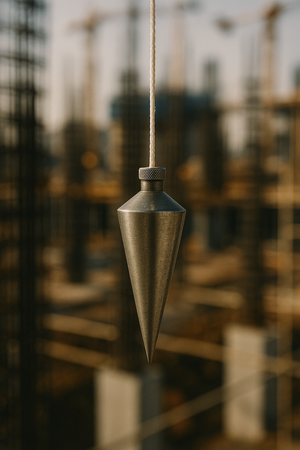
Plumb
The instrument of vertical grounding — checking alignment with principle against the pull of expedience.
→
Right Slipper
The instrument of verified follow-through — completing the pledge through verified action.
→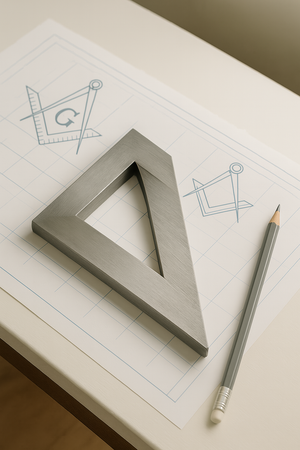
Square
The instrument of ethical validation — testing whether means are consistent with ends.
→
The Ruffians
The milestone of preserved integrity under assault — the test of what holds when the work is attacked.
→
The Volume of Sacred Law
The foundation of written principle — the external reference that anchors moral commitment beyond memory and preference.
→
Three Knocks
The instrument of committed initiation — announcing arrival and readiness to begin intentional work.
→
Trowel
The instrument of calibrated cohesion — spreading bond with precision, neither too much nor too little.
→Systems of Meaning
8 symbols
Arithmetic
The system for quantifying reality — rendering magnitude, frequency, and proportion explicit through number.
→
Astronomy
The system for orientation within scale — situating local activity within larger patterns and cycles.
→
Geometry
The system for organizing relationship and form — translating number into structure to reveal how parts relate within a whole.
→
Grammar
The system for structuring meaning — ordering ideas so they can be formed, shared, and preserved reliably.
→
Logic
The system for testing coherence — determining whether conclusions follow from premises.
→
Music
The system for ordering experience through patterned time — coordinating movement and attention through cadence rather than force.
→
Rhetoric
The system for communal meaning-making — delivering meaning effectively to a specific audience in a specific context.
→
The Craft
The system for coordinated labor — the shared operating language through which individual skill becomes collective action.
→Elements
7 symbols
Boaz
The element of disciplined strength — the sustaining force that bears load without collapsing under pressure.
→
Composite
The element of unifying synthesis — integrating mature principles into a coherent, enduring whole.
→
Corinthian
The element of aesthetic excellence — enriching form with beauty and care once structure is secure.
→
Doric
The element of visible strength — structuring power so it can be expressed steadily and predictably.
→
Ionic
The element of refined adaptability — improving fit and responsiveness without undermining the foundation.
→
Jachin
The element of firm establishment — fixing reference points so that strength can function reliably.
→
Tuscan
The element of robust simplicity — establishing the functional foundation before adding expression.
→Foundations
5 symbols
As Above, So Below
The foundation of reflective correspondence — what is true at one scale is true at all scales.
→
Grand Architect of the Universe (GAOTU)
The foundation of transcendent orientation — the reference point higher than personal preference that unifies diverse workers.
→
Moon
The foundation of restorative pacing — governing the rhythm of recovery, integration, and emotional replenishment.
→
Sun
The foundation of conscious illumination — directing clarity and energy toward purposeful effort under visible conditions.
→
The Pavement
The foundation of discernment within contrast — moving across opposites without collapsing into either.
→Milestones
3 symbols
Perfect Ashlar
The milestone of reliable integration — the stone worked to fit its place in the structure.
→
Rough Ashlar
The milestone of honest raw condition — beginning with an unvarnished acknowledgment of what is unworked.
→
The Temple
The completed structure — all stones, elements, and principles integrated into enduring purpose beyond individual effort.
→